
Lynnwood Previous Residents by Era
No single roll names every person who occupied a Lynnwood home. Begin with the source nearest the date in question, then use a second record to test the result. The Assessor and deed index establish the parcel and its owners. Printed directories, census schedules, obituaries, yearbooks, permits, and newspapers can add household names. An entry proves only that a person or owner was listed at that time. It does not prove continuous residence before or after the record date.
| Record source | Useful period | Access point | Evidence supplied |
|---|---|---|---|
| Recorded Documents Search | Most records from July 1976 | Snohomish County Recording | Parties, dates, parcel links, and transfers |
| Assessor field books | 1970 to 1999 | County scan site | Historic parcel and assessment clues |
| Polk and regional directories | Lynnwood 1970, 1971, and 1973 confirmed | SIGS and State Library catalogs | Dated name and address listings |
| Federal census schedules | Through 1950 under the release rule | Archives and library databases | Household members at the census date |
| Lynnwood permit files | Online after January 10, 2024; older files by request | City portal or records request | Address, parcel, applicant, and project facts |
For a recent transfer, start with the current parcel card and Recording. For the 1970s, add the scanned Assessor books and Polk volumes. A pre-incorporation trail may require county directories, historical maps, census records, plats, and newspapers under Alderwood Manor. The era determines the best door into the trail.
Alderwood Manor Address Clues
Lynnwood did not incorporate until 1959. Earlier papers may identify the same general place as Alderwood Manor, Alderwood, South Snohomish, or a regional telephone-directory area. Search the wording printed on the old item before modernizing it. A negative result under “Lynnwood” says little when the source predates the city or covers a wider district.
The locality is more than a catalog quirk. Alderwood Manor grew around the Interurban line and a demonstration farm. City planning history records a 1922 population of 1,463 and roughly 200,000 hens, a vivid sign of how different the district was. Historic photographs and Heritage Park material can explain why a road, tract, or family appeared where it did. Still, those sources supply context, not a present-day address match. Use the county parcel, plat, and legal description to prove continuity.
Lynnwood Deeds Cross the 1976 Seam
The Snohomish County Recorded Documents Search covers most instruments recorded from July 1976 forward. It accepts party names, document type, recording number, date, parcel ID, book and page, and legal-description terms. A free online account has been required since March 2, 2026. Search results and previews can lead to the deed that joined a named owner to this parcel.
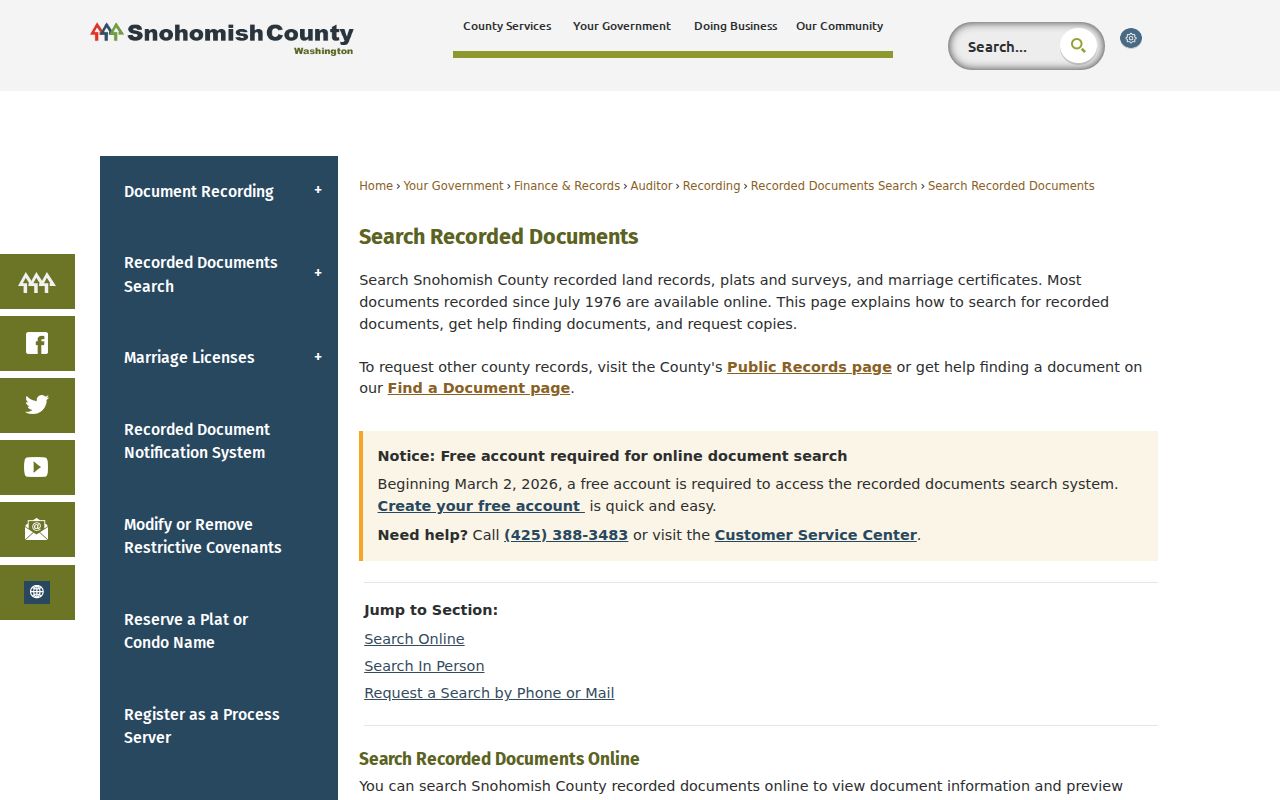
The captured county page also points to counter, phone, and mail access. If the chain appears to stop in 1976, that is an online boundary, not proof that an older deed vanished. Continue with Recording microfilm, a public terminal, a staff search, or a paid research request. The Washington State Archives land-title series offers another grantor-and-grantee route.
Trace Lynnwood Past Owners Backward
A clean title trail starts with today’s Snohomish County parcel account. Record the owner, taxpayer, parcel ID, legal description, transfer history, and situs address. The mailing address may belong to an agent, business, or owner elsewhere, so it does not establish occupancy. Then find the deed by which the present owner received title. The seller on that instrument becomes the next person to research as a buyer in an earlier deed.
- Copy the parcel ID and legal description from the current Assessor account.
- Find the present owner’s purchase instrument in the recorded-document index.
- Read the deed for the grantor, grantee, date, and land description.
- Search the seller as an earlier grantee, then compare the land.
- Repeat until the trail reaches the online cutoff or target date.
- For older links, use microfilm, staff help, archives, plats, and deed books.
- Grantor and grantee
- The grantor gives an interest in land; the grantee receives it.
- Chain of title
- The linked instruments that move ownership backward or forward over time.
- Legal description
- The formal land description, useful even after street labels change.
A deed proves a property interest, not that every named party lived in the house. Keep an owner timeline first. Add past residents only when a dated directory, census, obituary, or other sound source links them to the address.
Archives Verify Lynnwood Previous Residents
The Washington State Archives Snohomish land-record collection can be searched by party surname, first and middle name, Soundex, party type, keywords, and year range. Browse controls help when spelling is uncertain. Its index fields may include party names, document type, county, recording date, recording number, book and page, parcel number, and remarks.
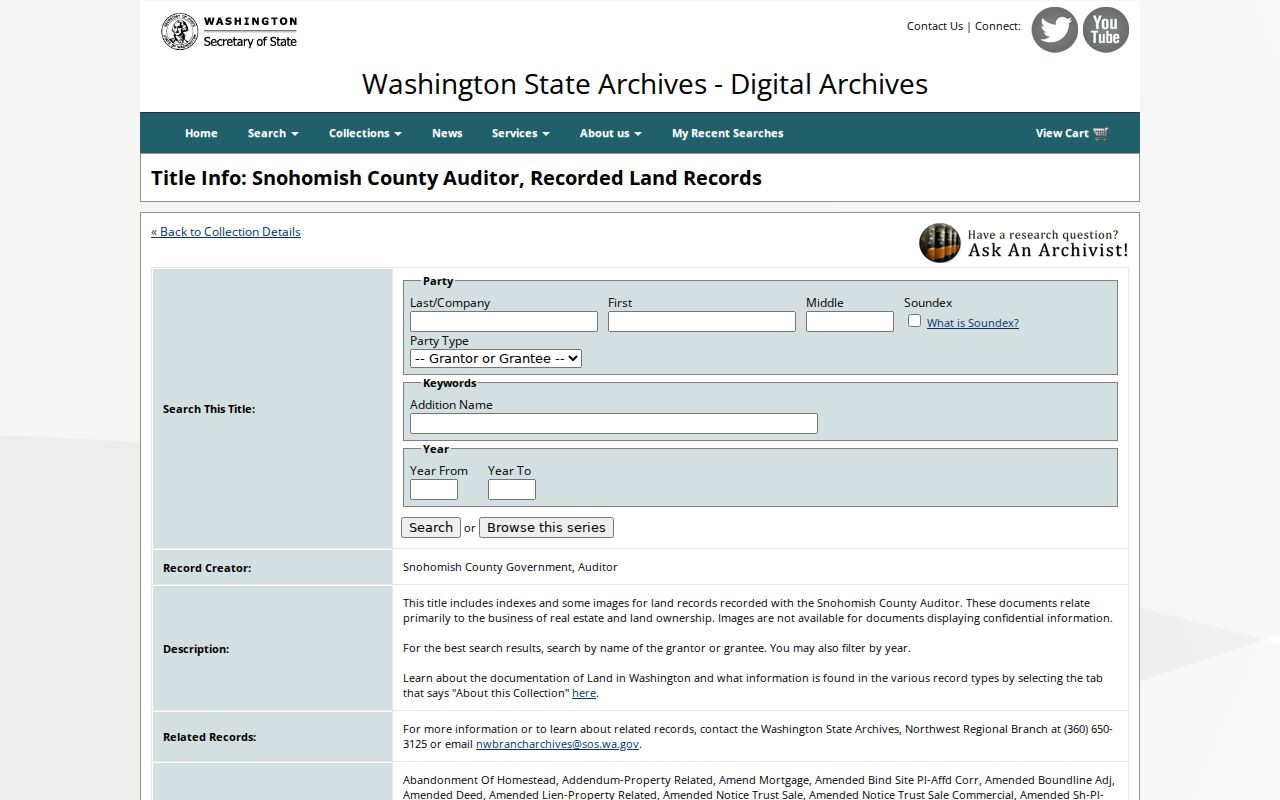
This source is valuable when a surname changes or the county portal does not yield a clean hit. An index is not the full instrument. Copy its identifiers, then request the image from the proper custodian when the archive does not display one or when the record is restricted.
Pair Lynnwood Directories With Census
Directories give a dated snapshot between census releases. The SIGS catalog confirms Polk’s Lynnwood volumes for 1970, 1971, and 1973, plus regional titles such as Southwest Snohomish and North King County–South Snohomish. Search both the surname and the address index, and copy the title, year, page, spelling, and all abbreviations.
The local genealogy catalog records the confirmed Polk volumes available for Lynnwood research.
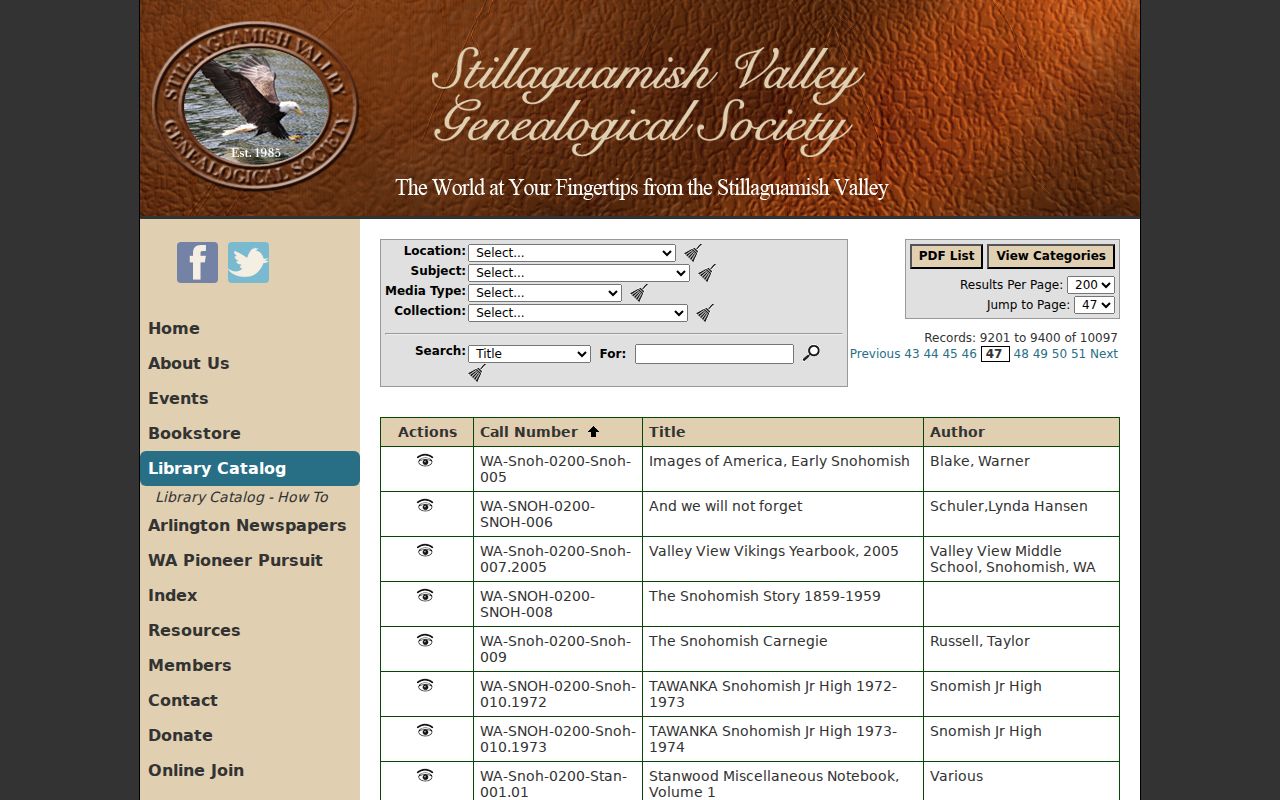
The catalog identifies a shelf source, not the name on a page. Contact the society for access to the volume or a page check.
- Choose the directory closest to the deed or event date.
- Check the alphabetical listing and any street or criss-cross section.
- Search nearby years to establish a first and last appearance.
- For older homes, compare the nearest released federal census.
- Use newspapers, vital indexes, probate, or yearbooks to test family links.
The latest public federal census is 1950. A census household is tied to one enumeration date, while a directory may reflect a survey or publication lag. Report a person as “listed” in that year, not as a continuous occupant. The full shelf and entry conventions belong on the Lynnwood city directory page.
Lynnwood Collections Fill Record Gaps
The Sno-Isle genealogy collection provides in-library Ancestry access, HeritageHub obituaries for cardholders, historical photographs, NewsBank, and microform readers at the Lynnwood branch and selected libraries. Librarian help covers genealogy, obituaries, and property research. These resources can connect a deed owner to a household or explain why a name disappears.
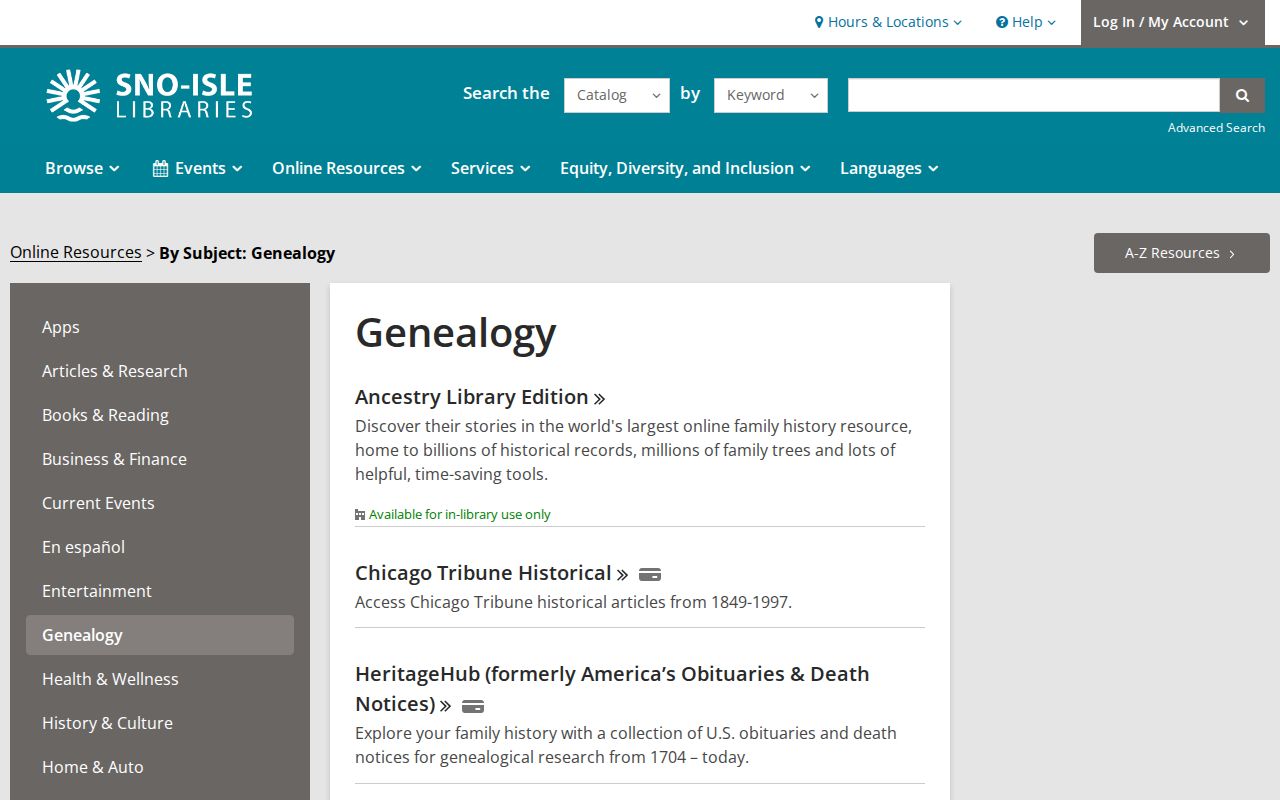
The screen shows access routes, but coverage varies by database and title. Save the database, search spelling, access date, publication date, and page. Lynnwood Library offers microform equipment. Verify its hours before travel.
SIGS at Humble House adds south Snohomish obituary clippings from 1986 through 2016, local newspapers, maps, high-school yearbooks, biographies, and society journals. Its published hours are Thursday and Saturday from 11 a.m. to 3 p.m., with a second-Tuesday lab or appointment route. Contact staff when the online catalog names a volume but shows no page image.
Lynnwood Past Residents and Death Gaps
A missing death-index result from 1960 through 1964 is not a sound end to a search. The state index has a known gap for those years. Check newspapers, probate, cemetery and funeral sources, and the proper health-record channel. A death certificate may be restricted based on age and requester status, so an index lead does not remove the need to follow the custodian’s rules.
Probate can link heirs, addresses, and real property after a death. Snohomish County Superior Court Clerk holds probate files and court copies, while selected probate and guardianship material also appears through state digital archives. Court indexes are finding aids. Verify the file with the clerk and respect sealed or excluded material. This closes a past-resident timeline without turning an absence into a false claim.
Lynnwood Permits Date Property Change
A permit can date a remodel, addition, demolition, or other work that helps explain the property timeline. Lynnwood’s online permit portal covers submissions after January 10, 2024 and supports searches tied to address, owner, parcel, permit or map number, application, and status. Older permits and code records require a city public-records request. Thus, “no result” online does not prove that a home has no earlier permit history.
Permit applicants are not always occupants. Owners, firms, and agents can appear. Use the permit date and parcel as evidence about the building, then test any person’s link against deeds and dated directories. This keeps the house history useful and precise.
Label Lynnwood Past Residents Honestly
Ownership and occupancy must remain separate. A tax card may name the owner and taxpayer but not each member of the household. A directory entry can name one householder, omit children, or show a business or mailing address. An obituary may list relatives and an earlier home without showing the exact dates of residence. Previous residents should be described with the source and date: “listed at this address in the 1971 directory” is stronger than “lived here for years.”
End the trail at the last record that can be verified. Then note any gap. Protected addresses, unpublished household members, lost directory years, changes in locality names, and records that have not been digitized all limit what can be known. Washington’s Address Confidentiality Program protects eligible people through substitute-address rules. Never infer or publish a protected location from fragments.
Lawful use. Research Lynnwood previous residents for house history, family history, or personal curiosity. Do not track, harass, intimidate, or expose any living person.